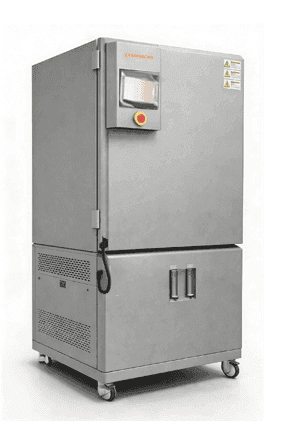
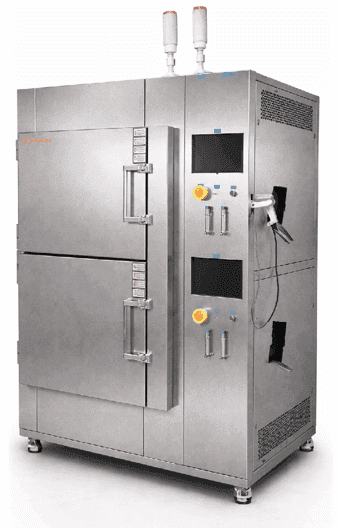
ESC-NO72-T6
ESC-NO72-T6 Nitrogen Oven
- Internal Chamber Dimensions400*450*400 mm
- Operating Temperature Range25~600 ℃
Total 6 items
Category:Nitrogen OvensClear

ESC-NO72-T6

ESC-NO100-T6

ESC-NO150-T6

ESC-NO270-T6

ESC-NO480-T6

ESC-NO1000-T6
Model comparison
Filter by sample dimensions, loading method and temperature requirements. Optional equipment is listed separately in each product’s details.
| Model | Chamber dimensions | Operating temperature range | Details and configuration |
|---|---|---|---|
| ESC-NO72-T6 | 400*450*400 mm | 25~600 ℃ | View configuration |
| ESC-NO100-T6 | 500*400*500 mm | 25~600 ℃ | View configuration |
| ESC-NO150-T6 | 500*500*600 mm | 25~600 ℃ | View configuration |
| ESC-NO270-T6 | 600*500*900 mm | 25~600 ℃ | View configuration |
| ESC-NO480-T6 | 800*600*1000 mm | A:Room temperature+25~200;B:Room temperature+35~300;C:Room temperature+45~400;D:Room temperature+50~500;E:Room temperature+60~600 | View configuration |
| ESC-NO1000-T6 | 1000*1000*1000 mm | 25~600 ℃ | View configuration |
Equipment applications
The ESSENSCI NO series focuses on heating in a nitrogen atmosphere and can be evaluated for atmosphere protection of semiconductor chips, precision optoelectronic components and new materials. Nitrogen supply and a low-oxygen chamber atmosphere must be confirmed separately. If reduced-pressure drying or vacuum atmosphere exchange is required, also compare the vacuum configurations of NVO or BVO.
Also known as: Nitrogen atmosphere oven, Nitrogen-purged drying oven
Chips and optoelectronic components differ in permissible oxygen content, temperature limits and sensitive surfaces. Define atmosphere and temperature windows using actual devices, and check oxidation throughout heating, holding and cooling.
Anti-oxidation heat treatment under nitrogen can be evaluated for metal terminals and precision metal parts. Initial surface condition, gas impurities and the loading arrangement all affect results; use post-treatment surface criteria for acceptance.
Research on new energy samples and new materials can compare different atmospheres, temperatures and hold times. If moisture content is an endpoint, specify its measurement and sampling methods separately; oxygen readings cannot substitute for moisture measurement.
Selection and acceptance
State nitrogen purity, available supply pressure, flow rate and continuous supply conditions. Evaluate an oxygen analyzer as needed, agree measurement location, response time and alarm requirements, then compare the complete oxygen-reduction profile.
Check forced-circulation or radiant-heating configurations, and provide workpiece dimensions, tray loading density and batch mass. Check airflow disturbance for small lightweight samples; for heavy loads, use actual sample temperature to determine when the hold begins.
Published NO configurations offer choices such as natural cooling, water cooling or air cooling; confirm the arrangement for the model and process. Evaluate atmosphere holding during cooling, unloading temperature and subsequent storage conditions together with the heat treatment program.
Frequently asked questions
Vacuum capability cannot be inferred from the name nitrogen oven. If evacuation or vacuum atmosphere exchange is required, evaluate the appropriate NVO, BVO or other configurations, and confirm the target operating pressure and program.
NO focuses on heat treatment under nitrogen protection, while IGO focuses on anti-oxidation process requirements. Compare gas circuits, monitoring, circulation, loading and cooling conditions against the same material endpoint. The names alone do not establish which has a lower oxygen content.
No. Air entering when the door opens, seal condition, sample outgassing and gas flow all change chamber oxygen content. When low-oxygen verification is needed, use a suitable analyzer to measure and record actual operating conditions.
These are common purchasing terms, but names alone cannot confirm vacuum, low-oxygen or moisture-control capability. Evaluate NO for heating under nitrogen protection. Compare NVO or BVO if evacuation is required, and CLO or LCO if particle control is needed, specifying separate acceptance criteria.
First specify the material's annealing temperature, surface oxidation limit and required cooling rate, then check the equipment's operating range. Nitrogen protection should cover the material-sensitive heating, holding and cooling stages. Base acceptance on actual workpiece temperature and post-treatment material results; a nitrogen connection alone does not validate the annealing process.
Continuous supply or staged replenishment should be determined from sealing, sample outgassing, door-opening frequency and permissible oxygen content. Record oxygen reduction, holding and cooling profiles under representative loading together with nitrogen consumption, then evaluate flow settings and the program. A higher flow rate alone does not establish effectiveness.
Fixed-setpoint control operates around one temperature setting; programmed control can arrange staged heating, holding and cooling conditions. The published NO control configuration is a touchscreen programmable controller. Confirm the number of segments, hold-timer start conditions and data recording functions for the control arrangement, especially the difference between the times at which chamber air and workpieces reach the target temperature.

Process knowledge
ESSENSCI · Process consultation
Tell us your material, sample dimensions, batch quantity and target temperature. We will discuss equipment selection with you based on atmosphere, loading and site conditions.
Share your use case and we will provide selection recommendations.