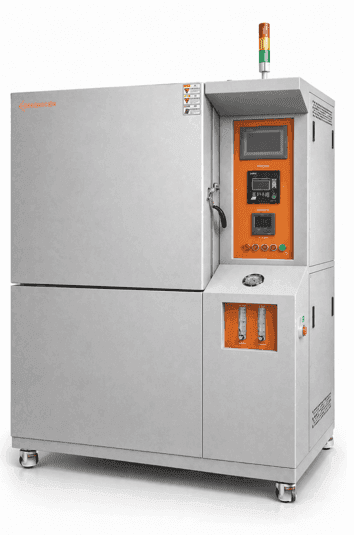
What matters most when comparing BVO and NVO?
Both equipment types require confirmation of vacuum and nitrogen configurations; BVO selection also calls for particular attention to forced circulation. Specific differences depend on the fan, flow paths and execution of pressure stages, and should be compared in equivalent-load trials.
Is forced circulation still effective under vacuum?
Gas pressure affects convective heat transfer, so atmospheric-pressure circulation performance cannot be applied directly to a vacuum stage. Confirm fan operating conditions and heat transfer mechanisms for the selected model, then validate them by measuring sample temperatures.
Do more densely packed trays always increase batch output?
Loading more material may increase heating and drying time and may obstruct flow. Compare the quantity meeting requirements against the complete batch time, retain the necessary space around workpieces, and validate consistency across all tray levels.
Is a forced-convection vacuum drying oven suitable for multiple tray levels?
BVO circulation designs can be evaluated for multilevel loading, but tray spacing, perforations, workpiece stacking and the pressure range permitting fan operation must be specified. Judge consistency from actual workpiece temperatures and drying results at each level. Hot-air circulation at atmospheric pressure does not directly represent heat transfer during the vacuum stage.
How should an electronic component oven or a nitrogen oven for packaging tests be selected?
First identify whether the task is moisture removal, adhesive curing or atmosphere heat treatment before testing, then list component temperature limits, loading, target pressure and permissible oxygen content. Compare BVO when vacuum, nitrogen backfilling and circulation must work together; compare NO when nitrogen protection alone is required. Evaluate the complete temperature and atmosphere profiles with the same workpieces.
What is the difference between temperature fluctuation and temperature uniformity?
Temperature fluctuation describes changes over time at one measurement location. Temperature uniformity describes differences between locations at the same time or over a specified period. For both, specify test temperature, measurement locations, stabilization time and empty or full-load conditions. A stable controller display does not mean that workpieces on every level have reached the same temperature.
Can materials containing organic solvents be placed directly in a forced-convection vacuum oven?
First provide material composition, volatile release per batch, permissible temperature and exhaust conditions so that the pump system, condensation capture, seal materials and exhaust system can be assessed. A cold trap or dry pump does not establish explosion-proof capability, and nitrogen purging does not replace the relevant assessment. Determine configuration and program separately for the actual material.