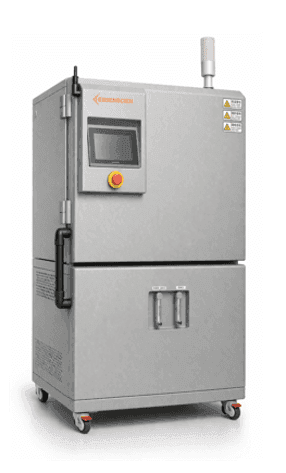
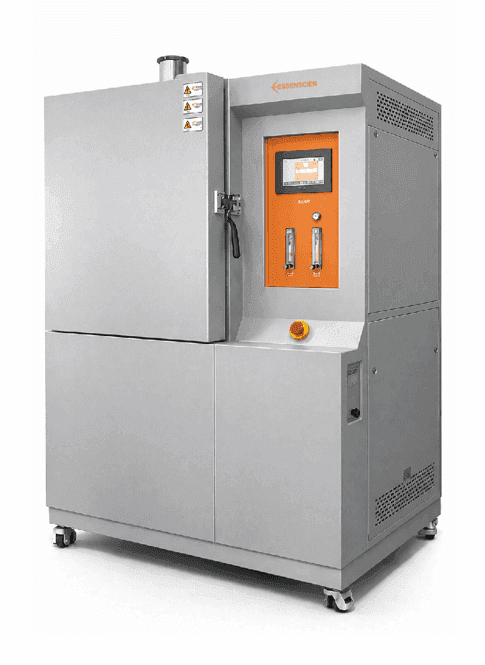
How should I choose between NVO and a standard VO?
If the main task is reduced-pressure drying without a nitrogen requirement, start by evaluating VO. If vacuum and nitrogen backfilling must work together, evaluate NVO. Finally, verify material temperature limits, operating pressure, atmosphere holding and loading conditions.
Does nitrogen backfilling make the chamber completely oxygen-free?
No. Residual air, leakage, sample outgassing and gas supply conditions all affect chamber oxygen content. Evaluate measurements at the agreed location and the holding profile; nitrogen purity cannot substitute for chamber readings.
Are nitrogen preheating and forced circulation suitable for every process?
These configurations must be confirmed for the specific model and program. Preheating can be considered when evaluating temperature changes during backfilling, while a circulation arrangement must be checked for load temperature differences and airflow disturbance. Validate powder or film samples first.
How does a nitrogen-backfilled vacuum oven work?
Evacuation reduces the gas in the chamber, followed by programmed nitrogen backfilling coordinated with heating and cooling to process the material. The number of evacuation cycles, backfill rate and nitrogen consumption depend jointly on the chamber, load, outgassing and low-oxygen target. To verify nitrogen backfilling performance, record chamber oxygen content rather than checking nitrogen flow alone.
What electrode information is needed to select a lithium-ion battery vacuum drying oven?
Select a battery electrode vacuum drying oven using electrode materials, roll or sheet format, coating temperature limits, initial and target moisture content, and batch load. Also specify sampling, transfer and protection against moisture reabsorption after cooling. Evaluate NVO according to vacuum and nitrogen requirements; suitability for a particular battery material must be judged from moisture measurements and material validation results.
Should heating or evacuation come first in nitrogen vacuum drying?
The sequence depends on material volatilization, foaming, structural pressure tolerance and sensitivity to oxidation; there is no universal program. First compare staged heating, gradual evacuation and backfill steps with a small batch, recording workpiece temperature, pressure and material changes. Then define the production program and recovery after abnormal shutdown.
How should full-load performance of a large vacuum drying oven be validated?
As chamber size increases, check workpiece temperatures at the least favorable locations, pump-down time, backfill paths and drying endpoints. Provide a loading diagram, tray spacing and total batch mass with the quotation request, and record temperature, pressure and oxygen profiles with a representative full load. Empty-chamber ultimate pressure cannot be treated directly as full-load process capability.