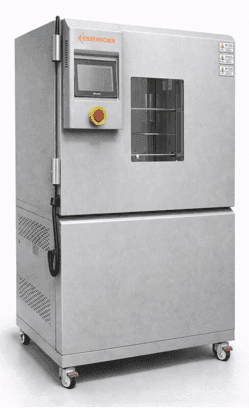
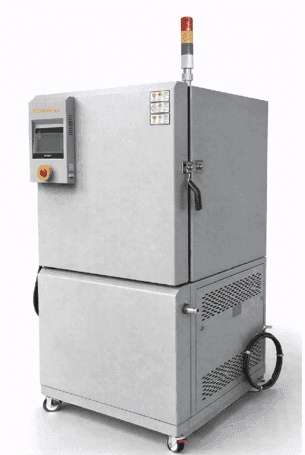
ESC-VO27-T6
ESC-VO27-T6 Vacuum Oven
- Internal Chamber Dimensions300*300*300 mm
- Operating Temperature RangeA:Room temperature+25~200℃;B:Room temperature+35~300℃;C:Room temperature+45~400℃;D:Room temperature+50~500℃;E:Room temperature+60~600℃
Total 7 items
Category:Vacuum OvensClear

ESC-VO27-T6

ESC-VO72-T6

ESC-VO125-T6

ESC-VO216-T6

ESC-VO343-T6

ESC-VO512-T6

ESC-VO1000-T6
Model comparison
Filter by sample dimensions, loading method and temperature requirements. Optional equipment is listed separately in each product’s details.
| Model | Chamber dimensions | Operating temperature range | Details and configuration |
|---|---|---|---|
| ESC-VO27-T6 | 300*300*300 mm | A:Room temperature+25~200℃;B:Room temperature+35~300℃;C:Room temperature+45~400℃;D:Room temperature+50~500℃;E:Room temperature+60~600℃ | View configuration |
| ESC-VO72-T6 | 400*450*400 mm | A:Room temperature+25~200℃;B:Room temperature+35~300℃;C:Room temperature+45~400℃;D:Room temperature+50~500℃;E:Room temperature+60~600℃ | View configuration |
| ESC-VO125-T6 | 500*500*500 mm | A:Room temperature+25~200℃;B:Room temperature+35~300℃;C:Room temperature+45~400℃;D:Room temperature+50~500℃;E:Room temperature+60~600℃ | View configuration |
| ESC-VO216-T6 | 600*600*600 mm | A:Room temperature+25~200℃;B:Room temperature+35~300℃;C:Room temperature+45~400℃;D:Room temperature+50~500℃;E:Room temperature+60~600℃ | View configuration |
| ESC-VO343-T6 | 700*700*700 mm | A:Room temperature+25~200℃;B:Room temperature+35~300℃;C:Room temperature+45~400℃;D:Room temperature+50~500℃;E:Room temperature+60~600℃ | View configuration |
| ESC-VO512-T6 | 800*800*800 mm | A:Room temperature+25~200℃;B:Room temperature+35~300℃;C:Room temperature+45~400℃;D:Room temperature+50~500℃;E:Room temperature+60~600℃ | View configuration |
| ESC-VO1000-T6 | 1000*1000*1000 mm | A:Room temperature+25~200℃;B:Room temperature+35~300℃;C:Room temperature+45~400℃;D:Room temperature+50~500℃;E:Room temperature+60~600℃ | View configuration |
Equipment applications
The ESSENSCI VO series serves material drying, precision-part moisture removal and degassing processes that require heating under reduced pressure. Selection should consider the sample's permissible temperature, volatile load and operating pressure together. Where nitrogen protection is required, also compare the NVO series: a vacuum function alone does not establish the ability to maintain a low-oxygen atmosphere.
Also known as: Vacuum drying oven, Industrial vacuum drying oven
For heat-sensitive materials and control of residual moisture or solvents, first define the reduced-pressure heating window from the permissible temperature and drying endpoint. Volatilization rates vary between materials, so monitor sample temperature alongside changes in mass or residual content.
Pores, stacked layers and carriers in precision parts and semiconductor-related components affect moisture removal. Validate the hold time with the actual load, and plan cooling and unloading to reduce the opportunity for moisture reabsorption after processing.
Vacuum degassing of adhesives, resins and mixed encapsulation materials can be evaluated according to material requirements. Evacuating too quickly may cause foaming or overflow; define the program using container headspace, pressure changes and material condition together.
Selection and acceptance
Specify the required absolute pressure, time to reach the target and holding conditions. The volatile load at full capacity, piping and seal condition all affect operating pressure; an empty-chamber reading cannot substitute for production performance.
The published VO configuration includes an oil-sealed pump, with a dry pump, cold trap and oil mist filter available as options. State the volatile species and quantity released per batch before evaluating pumping, trapping and exhaust arrangements. These accessories do not replace a material compatibility assessment.
Provide workpiece dimensions, the number of tray levels, batch mass and heating and cooling requirements. Measure sample temperature and vacuum profiles with a representative load, and determine whether options such as a data recorder or communication interface are needed.
Frequently asked questions
In purchasing, both terms often refer to the same type of reduced-pressure heating equipment; the name does not describe every capability. Compare temperature range, operating vacuum, pump system, internal chamber dimensions and actual material results before deciding whether the equipment meets the drying or heat treatment task.
Vacuum capability alone is insufficient to establish this. If the process requires nitrogen backfilling after evacuation, low-oxygen holding or protection during cooling, compare the NVO series and confirm the gas circuit, oxygen measurement and program configuration.
Not necessarily. Heat transfer to the sample, internal diffusion, volatile load and pump-system capacity can all limit the rate. Evaluate residual content at the permissible temperature and the complete cycle, rather than pursuing the lowest pressure alone.
Specify operating temperature, absolute pressure and pump-down time with material loaded in the same requirements document. For a high-vacuum drying oven, check the pump system, vacuum gauge and sealing design against the target pressure. For a high-temperature vacuum oven, also confirm that seals and temperature sensors are suitable at the operating temperature. VO temperature ratings and vacuum configurations must be confirmed separately; maximum temperature and minimum pressure must not be assumed to form a simultaneous operating point without validation.
For substantial water vapor or condensable vapor release, evaluate cold trap temperature, capture capacity and cleaning intervals. Where oil contamination is a concern, evaluate a dry pump as an oil-free pumping option. Cold traps and dry pumps address different issues and cannot replace each other. These VO accessories can be selected as needed. For materials containing organic solvents, also check pump compatibility, exhaust treatment and process conditions.
When requesting a quotation, provide workpiece and tray dimensions, batch load, operating temperature, target absolute pressure and drying endpoint. The pump system, cold trap, data recorder, communication interfaces and site power supply all affect configuration and price. Compare industrial vacuum drying ovens at the same load, temperature-pressure conditions and acceptance criteria, rather than by nominal volume alone.
Vacuum annealing is mainly assessed by outcomes such as material microstructure, surface condition or electrical properties, whereas drying usually targets residual moisture or volatiles. Their endpoints differ. Confirm material temperature limits, heating and cooling rates, hold time and cooling conditions separately, then validate the programs using representative workpiece temperatures and post-treatment inspection results.

Process knowledge
ESSENSCI · Process consultation
Tell us your material, sample dimensions, batch quantity and target temperature. We will discuss equipment selection with you based on atmosphere, loading and site conditions.
Share your use case and we will provide selection recommendations.