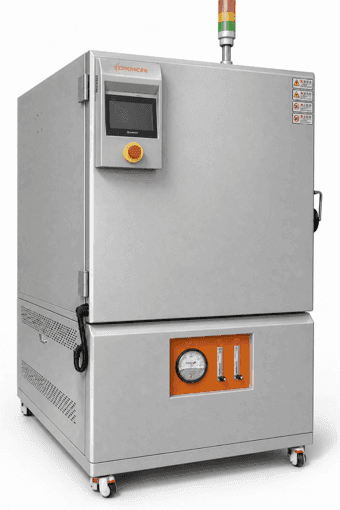
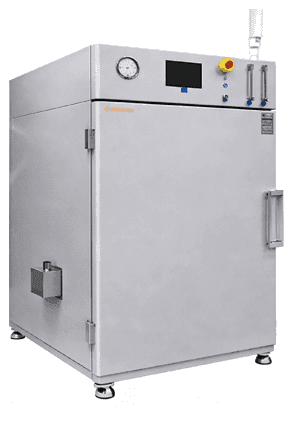
ESC-LCO100-T5
ESC-LCO100-T5 Clean Non-Oxidation Oven
- Internal Chamber Dimensions500*500*400 mm
- Operating Temperature Range25~500 ℃
Total 5 items
Category:Cleanroom Oxygen Free OvenClear

ESC-LCO100-T5

ESC-LCO211-T5

ESC-LCO423-T5

ESC-LCO640-T5

ESC-LCO4500-T5
Model comparison
Filter by sample dimensions, loading method and temperature requirements. Optional equipment is listed separately in each product’s details.
| Model | Chamber dimensions | Operating temperature range | Details and configuration |
|---|---|---|---|
| ESC-LCO100-T5 | 500*500*400 mm | 25~500 ℃ | View configuration |
| ESC-LCO211-T5 | 650*650*500 mm | 25~500 ℃ | View configuration |
| ESC-LCO423-T5 | 650*650*1000 mm | 25~500 ℃ | View configuration |
| ESC-LCO640-T5 | 800*800*1000 mm | 25~500 ℃ | View configuration |
| ESC-LCO4500-T5 | 3000*1000*1500 mm | 25~500 ℃ | View configuration |
Equipment applications
The ESSENSCI LCO series serves precision-assembly heat treatment where both particle contamination and oxidation risk matter, bringing clean circulation and atmosphere requirements into equipment selection together. Clean non-oxidizing operation is not a promise of zero particles or zero oxygen. Suitability must be validated using particles, oxygen content, workpiece temperature and material results under operating conditions.
Also known as: Clean low-oxygen oven, Cleanroom nitrogen oven
HUD lenses, large optoelectronic assemblies and semiconductor assemblies require control of both surface deposition and oxidation changes. Inspect surfaces after heat treatment using actual supports, trays and materials, confirming particle and atmosphere targets separately.
Multilevel loading of communication modules and precision metal parts affects gas exchange flow and temperature distribution. Establish the carrier layout first, then check oxygen changes, workpiece temperatures and surface results at different locations.
Set programs for biochemical medical-device-related processes according to material temperature limits, cleanliness requirements and moisture endpoints. Low-oxygen and filtration configurations cannot replace validation of product cleaning, packaging or sterilization.
Selection and acceptance
Specify particle sizes, counting method and sampling locations, together with permissible oxygen content, hold duration and oxygen-reduction time. When both targets must be met simultaneously, define the criteria for starting the temperature hold.
Confirm the actual high-temperature high-efficiency filtration, nitrogen supply and oxygen measurement configurations, and their corresponding operating temperatures. Do not treat optional items in a configuration list as standard capabilities of every unit.
Use representative full loads to test heating, holding, cooling and recovery after door opening. Evaluate data recording, water cooling, carts and communication interfaces as needed, and agree the temperature, oxygen and particle measurement records.
Frequently asked questions
Suitability depends on the process. Internal particle levels, atmosphere, outgassing and cleaning and maintenance requirements are linked to the site's cleanroom management conditions. Validate the equipment at the intended load, temperature and operating procedure.
No. Filtration primarily addresses particles; oxygen content depends on gas supply, seals, gas exchange and sample outgassing, among other factors. Use different measurement methods for cleanliness and low oxygen, with separate acceptance requirements.
Evaluate LCO when workpieces have particle criteria and also require oxidation control during heating and cooling. Compare using the same materials, loads and measurement methods to confirm whether the combined configuration meets the targets throughout the cycle.
Purchasing terms may cover both particle and oxidation control, so list the two sets of criteria separately. Evaluate LCO for a combined clean low-oxygen process, checking filtration, nitrogen supply and oxygen measurement at operating temperature. Then use actual loads to confirm whether both criteria can be met in the same stage.
Evaluate LCO when the formulation or workpiece requires both surface particle and oxidation control. Provide the adhesive curing window, outgassing and sensitive-surface requirements, and confirm filtration maintenance and exhaust conditions. Determine suitability through material testing such as cure, adhesion or electrical properties, rather than the adhesive name alone.
Oxygen content and moisture are different criteria and cannot substitute for each other. If the material is moisture-sensitive, also specify gas supply dew point, initial and target material moisture content, and sampling and transfer conditions. Use moisture measurements and oxygen records for separate acceptance checks.
Recovery time depends on door-open duration, tray and workpiece condition, nitrogen flow and filtered circulation. Agree the timer start after door closure and the sampling locations, and record both particles and oxygen. Determine whether the next batch can begin only after both criteria and the temperature meet process requirements.

Process knowledge
ESSENSCI · Process consultation
Tell us your material, sample dimensions, batch quantity and target temperature. We will discuss equipment selection with you based on atmosphere, loading and site conditions.
Share your use case and we will provide selection recommendations.