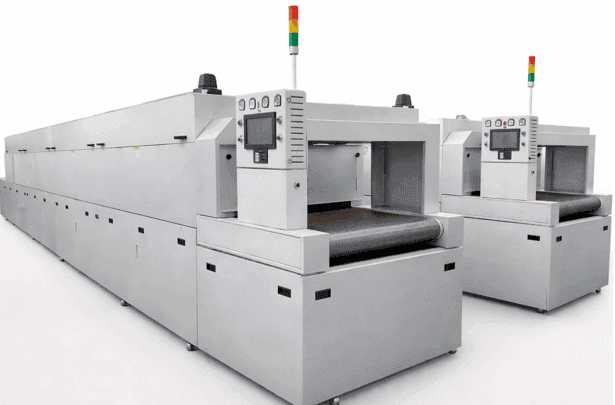
How is the actual throughput of a tunnel oven determined?
First determine the conveyor speed that meets the product temperature profile, then calculate throughput from product spacing, units per row and loading/unloading capacity. Also account for startup stabilization, changeovers and upstream and downstream operations; maximum conveyor speed alone is insufficient.
Is the zone setpoint the workpiece temperature?
No. Workpiece thermal mass, fixtures, belt speed and heating method all affect actual temperature. Record a traveling temperature profile with a representative load, and judge the process by the time the workpiece spends in the target range.
Can a tunnel oven also meet low-oxygen or cleanliness requirements?
Corresponding options can be evaluated for the process, but are not standard capabilities of every model. Inlet and outlet openings, conveyor design and product spacing affect atmosphere and particle control. Agree measurement conditions during operation.
How should automated baking equipment be matched to production-line cycle time?
Determine belt speed and effective heating length from the required hold time after the workpiece reaches its target temperature. Calculate throughput using workpiece spacing, units per row and loading/unloading times. Integrate TCO with upstream and downstream processes using actual fixtures and the selected conveyor design, and confirm handling of material shortages, accumulation and abnormal line stops.
How should thermal-oil-heated and steam-heated ovens be compared?
Published TCO heat-source options include electricity, natural gas, thermal oil and steam; actual supply is confirmed for the selected arrangement. For thermal-oil heating, specify supply and return temperatures, flow and connections. For steam heating, specify pressure, supply capacity and condensate conditions, then compare the material's required temperature zones and site operating costs.
Does independent control of multiple temperature zones mean separate independent chambers?
No. Tunnel-oven zones can still be affected by openings, conveying and heat transfer between adjacent zones. Independent temperature settings do not mean that the atmospheres are isolated. Validate profiles at different belt speeds and loads using traveling temperature measurements. If multiple independent chambers are required, confirm the structure and control arrangement separately.
How can overbaking be avoided when a tunnel oven line stops?
Agree the heating, conveying, cooling and alarm logic following a line stop, and specify how workpieces are handled during power loss or faults. Validate the effects of extended residence time with the maximum thermal load and representative materials, then determine permissible stop duration and the recovery procedure. Normal-speed temperature profiles alone are insufficient.